Present Bias
Your brain gives disproportionate weight to right now over any future payoff — even when the future payoff is objectively larger. The sneakers beat the savings account every time.
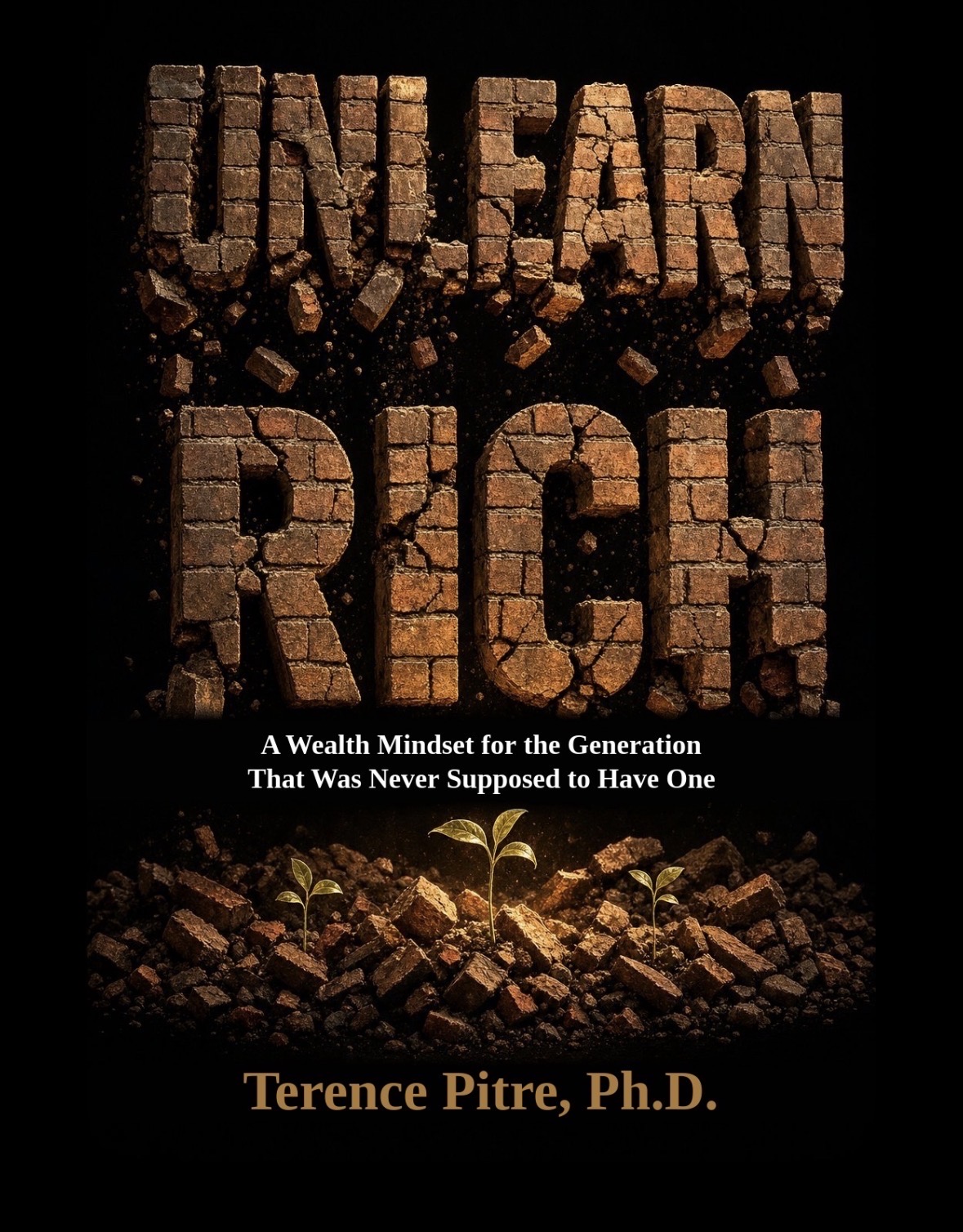
The psychological guide to wealth for young Black Americans. Not what to invest in — how to think about money in the first place.
Chapter 6 breaks down the external cultural forces — social media comparison, lifestyle inflation, and the money conversations nobody taught you to have — that amplify every psychological bias in your head. It's one of the sharpest chapters in the book. Free. No strings.
Download Free Chapter →Instagram is not a financial plan. The algorithm is engineered to exploit the same psychological vulnerabilities that keep you from building wealth. This chapter names the mechanics — and shows you how to opt out of the performance and build the thing instead.
Each one has a name, a historical root, and — more importantly — a way out.
Your brain gives disproportionate weight to right now over any future payoff — even when the future payoff is objectively larger. The sneakers beat the savings account every time.
Losing $100 feels twice as bad as gaining $100 feels good. When your history includes having wealth taken — Black Wall Street, the Freedman's Bank — loss aversion is inherited memory, not irrationality.
The preference for how things are, even when how things are isn't working. Two years of compounding wealth gone because opening an account felt like too much friction to overcome.
Harvard research documented this precisely: financial stress doesn't just limit your money — it limits your thinking. The cognitive space you need to plan ahead is consumed by triage.
Your brain treats things it can't easily picture as unlikely or irrelevant. When you've never seen someone who looks like you build wealth, your brain treats it as something other people do.
Research at Stanford proved it: being aware of a negative stereotype about your group — even subconsciously — impairs performance in that domain. Financial spaces are not neutral for Black Americans.
This one isn't a cognitive error — it's a rational response to documented harm. The Freedman's Bank. Redlining. Predatory lending. The trust was earned away. The challenge is preventing rational skepticism from becoming permanent paralysis.
You're the first in your family to make real money. The calls start immediately. Not always direct asks — sometimes just awareness of need. You give because you love your family. But the capital is redistributed before it can compound.
25 questions. Five sections. A mirror, not a verdict. Know where you are before you decide where to go.
This book is organized in three parts: where we came from, what's running in your head, and how to build something new.
Introductory price — rising to $14.99